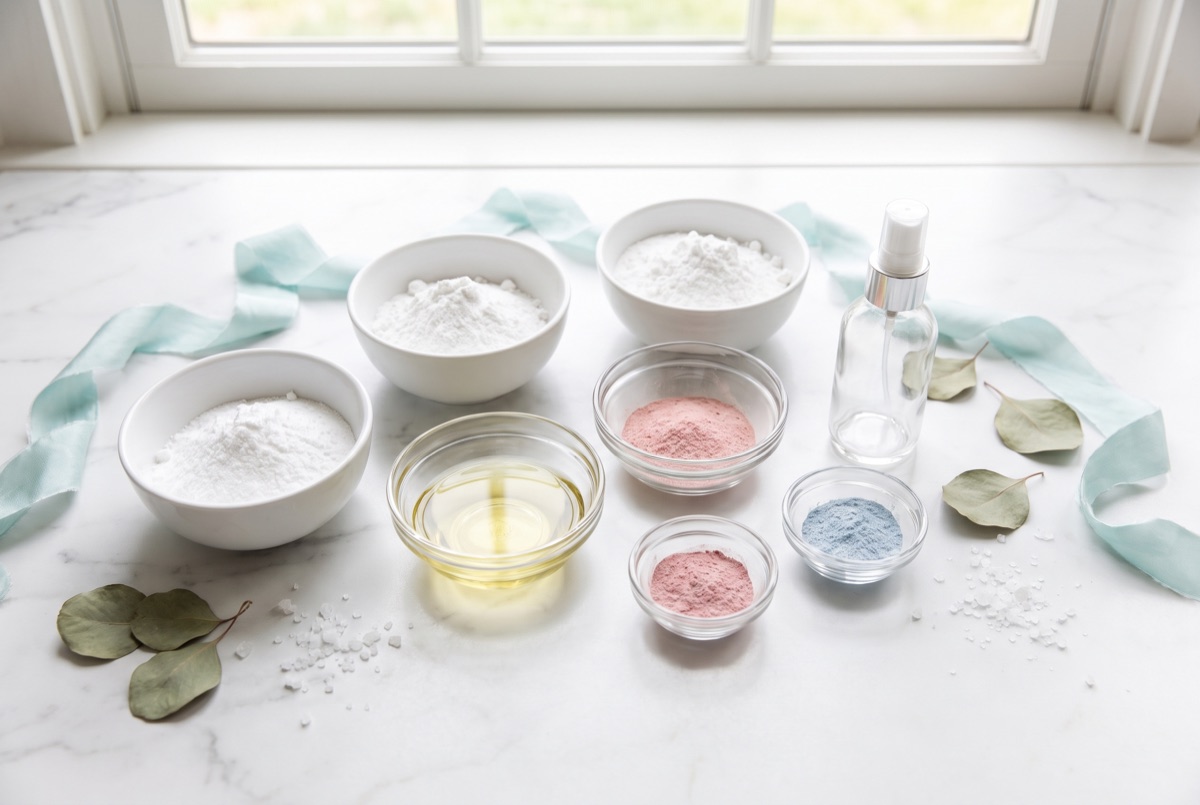
The Bath Bomb Ingredient Guide
Bath bombs can be customized with a wide range of ingredients, including bath salts, body safe coloring, and fragrances. There are a few key ingredients that bath bombs require which is baking soda and citric acid. Why is this? When baking soda and citric acid are mixed and then put in water, they create a chemical reaction made of carbon dioxide that produces lots of bubbles.
Essentials
Baking soda (sodium bicarbonate)
Baking soda (sodium bicarbonate) is required for bath bomb formulation. It leaves your skin feeling soft, smooth, and clean. It also offers some really useful detoxifying effects because of its high alkalinity, baking soda can help with a number of common health issues, such as yeast infections, urinary tract infections (UTIs), rashes, bug bites, dry scalp, smelly feet, and hemorrhoids.
Citric Acid
citric Acid is required as a base ingredient for bath bomb formulation. Citric Acid is a natural substance that helps to rejuvenate and refresh the skin, but it also helps to stall the aging process in your skin.
Optional
Magnesium salt
Magnesium salts absorbed through the skin also works to relieve muscle tension, pain, and inflammation in joints. Submerge yourself in a warm magnesium salt bath to alleviate tension headaches or soothe abdominal cramps. Tired and sore feet will also benefit from the therapeutic warmth of an magnesium salt soak.
Moisturizing oils / Carrier oils
(Examples: almond oil, argon oil, olive oil, coconut oil, sunflower oil etc.)
the most effective way to treat dry skin is by adding moisturizing oils to your bath. A carrier oil is also essential when using essential oils topically. Carrier oils ensure that the essential oil being topically applied is comfortable to the skin and doesn’t cause any burning effects.
Polysorbate 80
Polysorbate 80 is a surfactant and emulsifier often used in foods and cosmetics. Use this to mix your oils and mica into the bath water instead of having it sit on top and stick to the tub.
Witch hazel
Witch hazel Fades bruises and blemishes. Witch hazel may also be used to treat blemishes already present on the face or other areas of the body. Use witch hazel as a light wetting ingredient to bind your dry ingredients together.
SlSA
Sodium Lauryl Sulfoacetate (SLSA) is derived from coconut and palm oils.
This fine white powder is excellent for blending into bath bombs, bath fizzes, powdered bubble baths, bath salts for bubbles and foam.
Kaolin Clay
White kaolin, also known as China or white clay, is basically the mildest of all clays. It is suitable for sensitive skin. It helps stimulate circulation to the skin while gently exfoliating and cleansing it. It does not draw oils from the skin and can therefore be used on dry skin types. Kaolin clay can be used to make your bath bombs harden quicker.
Bentonite Clay
This clay helps to remove toxins from your pores, allows skin to heal and reduces inflammation. Bentonite clay helps in the lightening of acne marks. Bentonite clay can be used to strengthen bath bombs.
Mica
Mica is a natural product, that is mined then coated with FD&C colorants, or pigments, or a combination of both to achieve the colorant. The dual sided color is what causes the shimmer and sheen of micas. Mica is exactly the same stuff you see in your lipstick, eye shadow and blush.
Corn Starch
Cornstarch can be used to soothe irritation of the skin, including sunburn and skin allergies. Corn starch will slow down the time it takes for your bath bomb to devolve.
Cream of Tartar
Also known as potassium bitartrate, cream of tartar In bath bombs acts as a binding agent, making the bomb harder and stronger.
Skin Safe Fragrance (Fruit Loops is always fun)
Essential oils
The aromatic oils extracted from botanicals called essential oils, can be added when you are making your own bath bombs, to create naturally scented, and therapeutic, bath soaks. Don’t forget to use a carrier oil. Carrier oils ensure that the essential oil being topically applied is comfortable to the skin and doesn’t cause any burning effects.
Herbs and Flowers:
Example: Rose Petals, Lavender, Chamomile, Spirulina ECT.
Like this:
Like Loading...
Related
Leave a Reply Cancel reply
You must be logged in to post a comment.
➤
%d bloggers like this: